Hui Tuo Power

Why Temperature and Humidity Controllers Are Used in High and Low Voltage Switchgear
Why Temperature and Humidity Controllers Are Used in High and Low Voltage Switchgear
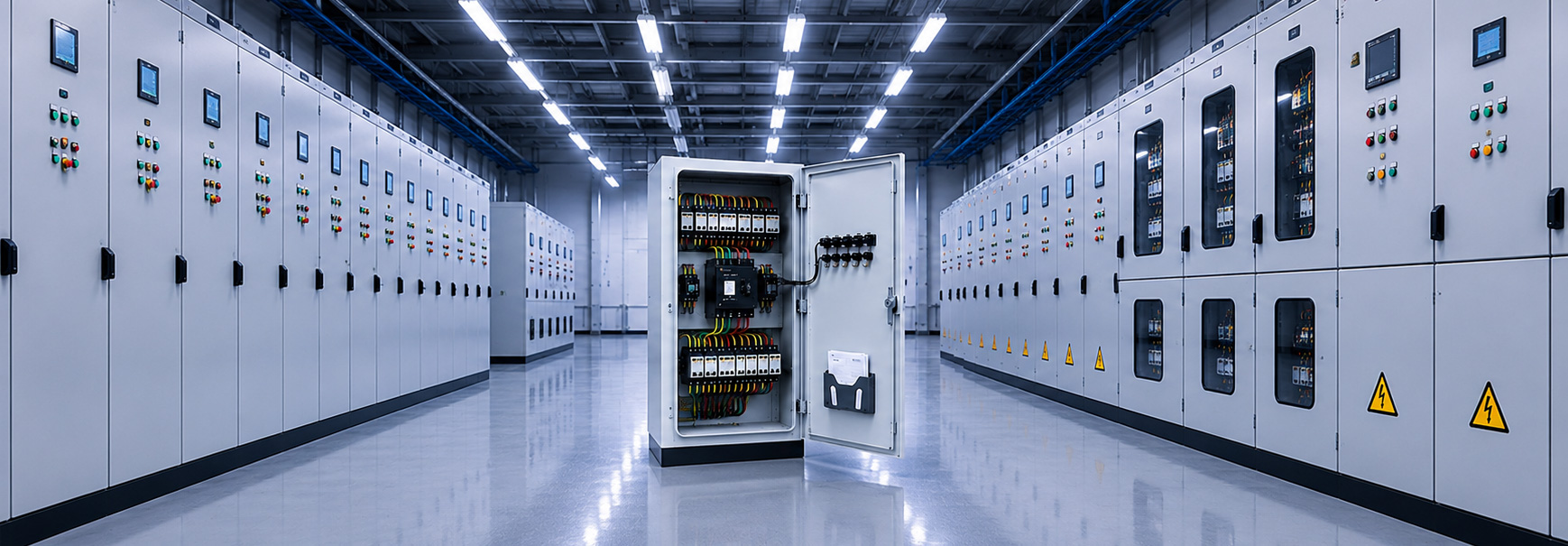
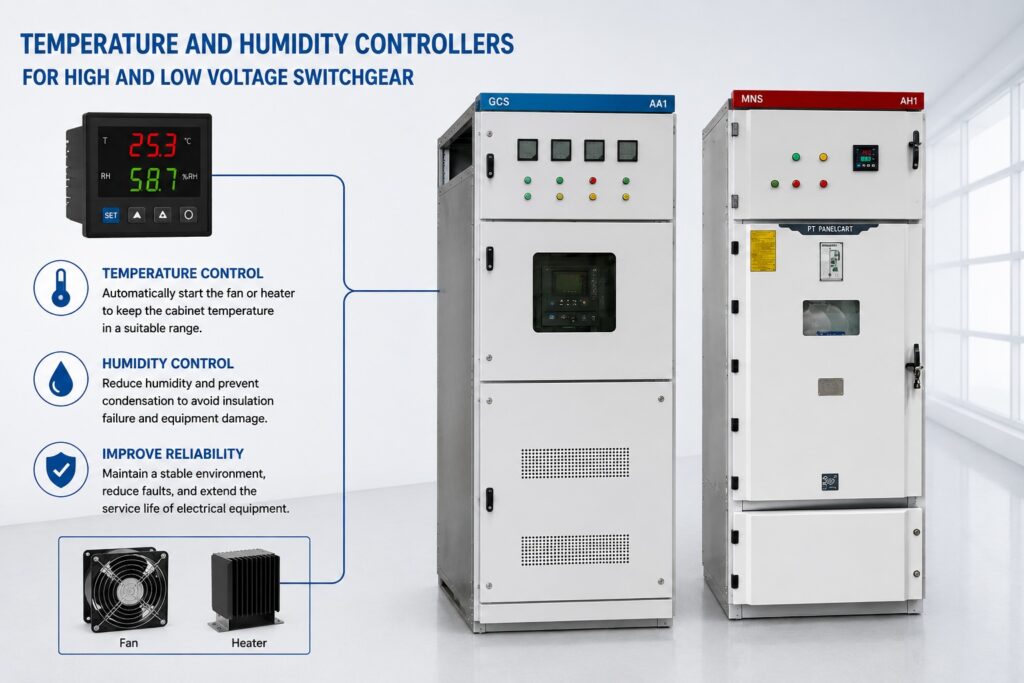
High and low voltage switchgear is widely used in power distribution systems. During operation, the internal environment of the cabinet can be affected by temperature, humidity, heat generated by electrical components, and condensation. Therefore, temperature and humidity controllers are often used to help maintain a suitable operating environment for electrical equipment.
1. Reducing High Temperature and Humidity Risks
In southern regions or humid environments, summer temperatures are often high and humidity can be heavy. At the same time, circuit breakers and other components inside high and low voltage distribution cabinets generate heat during operation. If heat and moisture are not controlled in time, the internal environment of the cabinet may become unsuitable for equipment operation.
By using a temperature and humidity controller to start ventilation fans, moisture can be discharged and the cabinet temperature can be reduced. This helps keep the internal environment within a more suitable range for electrical components and reduces the possibility of equipment faults caused by overheating or humidity.
2. Supporting Operation in Low-Temperature Environments
In northern regions, winter temperatures can be very low, sometimes reaching -5℃ to -30℃ or even lower. If electrical equipment is started directly under very cold conditions, it may increase operational risk and affect the reliability of internal components.
A temperature controller can start the heater first, allowing the cabinet temperature to rise to a more suitable level before the equipment operates. This helps reduce faults caused by low temperature and can also support longer service life of electrical components.
3. Preventing Condensation Problems
Condensation is one of the important causes of faults in high and low voltage cabinets, medium-voltage cabinets, and terminal boxes. In environments with large temperature differences or long periods of fog and humidity, condensation may form inside the cabinet. This can affect insulation performance and may lead to electrical faults.
Temperature and humidity controllers can help reduce condensation by controlling heating, ventilation, and moisture removal. Keeping the cabinet dry is important for protecting insulation parts, terminals, circuit breakers, and other internal components.
4. Improving Equipment Reliability
Using a temperature and humidity controller helps maintain a stable internal cabinet environment. It can reduce the influence of humidity, condensation, overheating, and low-temperature operation. For power distribution systems, this is important for improving equipment reliability and reducing maintenance risks.
Conclusion
Temperature and humidity controllers play an important role in high and low voltage switchgear. They help control heat, remove moisture, prevent condensation, and support stable operation under different environmental conditions. Reasonable temperature and humidity control can improve the safety, reliability, and service life of electrical equipment.