Hui Tuo Power


Under What Conditions Can an Overcurrent Protector Operate Normally?
Under What Conditions Can an Overcurrent Protector Operate Normally?
In electrical systems, overcurrent protectors are used to protect circuits and equipment from excessive current. In some applications, one part of the system protects the circuit, while another part protects the equipment. When the current reaches a value that may cause the conductor temperature to become too high, the overcurrent protector opens the circuit to reduce the risk of overheating and damage.
This process can be compared to water rising in a tank. When the water reaches a certain level, the valve is closed to stop further flow. Similarly, when the current exceeds the allowable level, the overcurrent protector acts to interrupt or limit the current.
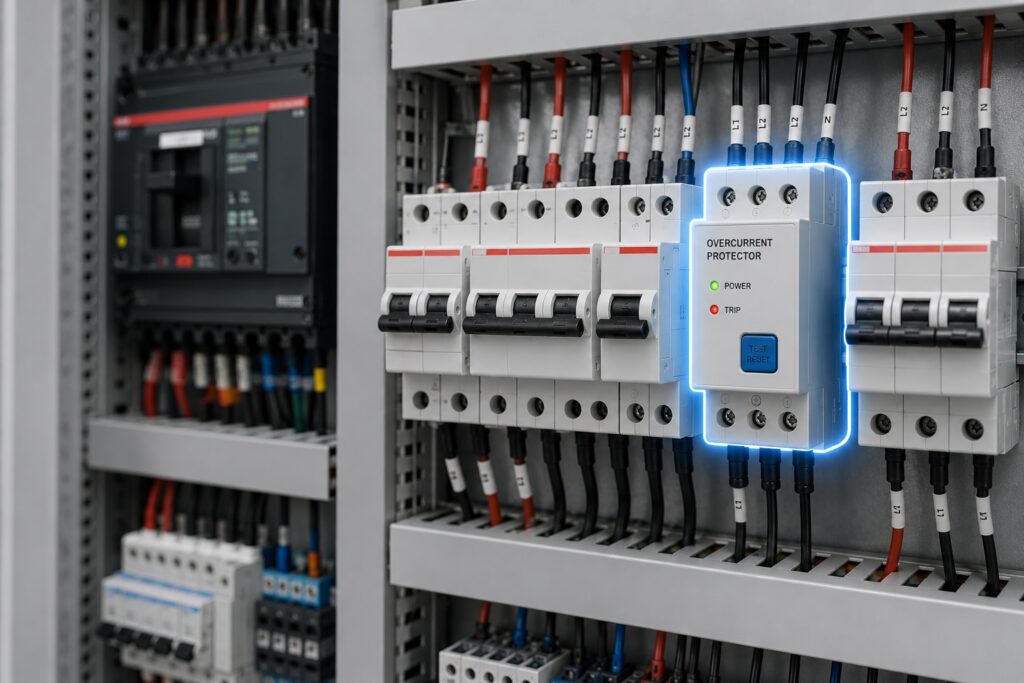
Normal Operating Conditions
To ensure normal operation, the overcurrent protector should be selected according to the actual working conditions of the circuit. These conditions include rated voltage, rated current, conductor capacity, equipment requirements, and the possible fault current available at the line-side terminals of the equipment.
The interrupting rating of the overcurrent protection device must be sufficient for the maximum available fault current. If the interrupting capacity is not properly selected, the device may not be able to safely clear a fault. Therefore, standard ratings of fuses and fixed-trip circuit breakers should be considered during selection.
Short Circuit and Ground Fault Protection
When a short circuit or ground fault is detected, the overcurrent protector opens the circuit to protect the equipment. Each electrical device should have a suitable short-circuit current rating. This rating allows the equipment to withstand and clear a short circuit or ground fault without causing serious damage to the electrical components in the circuit.
Short circuits and ground faults are not normal operating conditions. They are abnormal fault conditions that require fast and reliable protection. Because of this, the protection device and the conductor may have different operating characteristics and protection requirements.
Key Factors for Proper Operation
For an overcurrent protector to operate normally, the following factors should be considered:
- Rated current: The protector should match the normal operating current of the circuit.
- Rated voltage: The device should be suitable for the voltage level of the electrical system.
- Interrupting capacity: The protector should be able to safely interrupt the maximum available fault current.
- Short-circuit current rating: The protected equipment should have a rating suitable for possible fault conditions.
- Application environment: Temperature, installation conditions, and operating environment should also be considered.
Conclusion
Overcurrent protectors can operate normally only when they are properly selected and matched with the circuit and equipment. Correct selection helps protect conductors, reduce overheating risks, clear short circuits or ground faults, and improve the safety and reliability of electrical systems.